We didn’t really, steel is a phenomenal material at retaining strength at high temperatures with minimal long-cycle damage and was well industrially established at the time.
The issue with fusion and especially tokamaks is the triple challenge of mechanical loads + radiation loads + high heat flux. There’s really no material known to mankind which can maintain the necessary high-temperature strength, while moving enough heat out of the reactor to keep it economical, without critically degrading in a matter of weeks/months due to fast neutron irradiation (let alone decades, as is standard for nearly every other thermal energy source). Hence, the heat sink will need to be replaced regularly.
Add to that the fact that fusion companies are essentially giant bubbles of debt owed to venture capital currently and you don’t have a formula for a successful and cheap energy source.
But anyway, we already have fusion energy and it was probably partly used to charge your phone! It comes from the big floating fusion reactor in the sky, only requires a few panels of silicon, and is the cheapest and greenest energy source in existence.
I love solar, but we can’t pretend it’s without its own challenges.
A utility scale solar installation comparable to an average fission plant would take 15 square kilometers. Not to mention how complicated the infrastructure to actually transmit that power is.
Space is only one challenge though. You have no energy production at night, and energy generation can drop by half to almost three quarters during winter at higher latitudes.
fusion companies are essentially giant bubbles of debt owed to venture capital currently
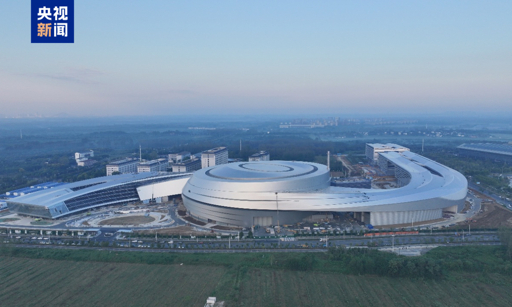
There’s a couple of loud, commercial fusion companies sucking up VC money, but all the serious projects are nationalized (China) or are projects run by public institutes with government funding (EU).
So then you need 15km² to cover the day, another 5-10km² to cover the night, and then however much space and lithium it’s going to take to store all that energy.
And this still doesn’t solve the problem once you’re a little too far off the equator.
Sodium ion, ammonium/hydrogen production, elevated hydro, compressed air, etc. There are lots of options that are being built up. There is also a lot of desert in the world. It would be a major undertaking but it’s possible.


I’m sure people said the same thing the first time we thought about turning a piston with literal explosions.
The engineering challenges are immense, but these challenges shouldn’t be an excuse we use to prop up inferior, dirtier power generation.
We didn’t really, steel is a phenomenal material at retaining strength at high temperatures with minimal long-cycle damage and was well industrially established at the time.
The issue with fusion and especially tokamaks is the triple challenge of mechanical loads + radiation loads + high heat flux. There’s really no material known to mankind which can maintain the necessary high-temperature strength, while moving enough heat out of the reactor to keep it economical, without critically degrading in a matter of weeks/months due to fast neutron irradiation (let alone decades, as is standard for nearly every other thermal energy source). Hence, the heat sink will need to be replaced regularly.
Add to that the fact that fusion companies are essentially giant bubbles of debt owed to venture capital currently and you don’t have a formula for a successful and cheap energy source.
But anyway, we already have fusion energy and it was probably partly used to charge your phone! It comes from the big floating fusion reactor in the sky, only requires a few panels of silicon, and is the cheapest and greenest energy source in existence.
I love solar, but we can’t pretend it’s without its own challenges.
A utility scale solar installation comparable to an average fission plant would take 15 square kilometers. Not to mention how complicated the infrastructure to actually transmit that power is.
Space is only one challenge though. You have no energy production at night, and energy generation can drop by half to almost three quarters during winter at higher latitudes.
There’s a couple of loud, commercial fusion companies sucking up VC money, but all the serious projects are nationalized (China) or are projects run by public institutes with government funding (EU).
Agreed, a 100% solar grid is unrealistic. A healthy mix of nuclear and reneweables with a strong energy storage buffer is the way forward imo.
It’s called energy storage technology.
So then you need 15km² to cover the day, another 5-10km² to cover the night, and then however much space and lithium it’s going to take to store all that energy.
And this still doesn’t solve the problem once you’re a little too far off the equator.
Sodium ion, ammonium/hydrogen production, elevated hydro, compressed air, etc. There are lots of options that are being built up. There is also a lot of desert in the world. It would be a major undertaking but it’s possible.