

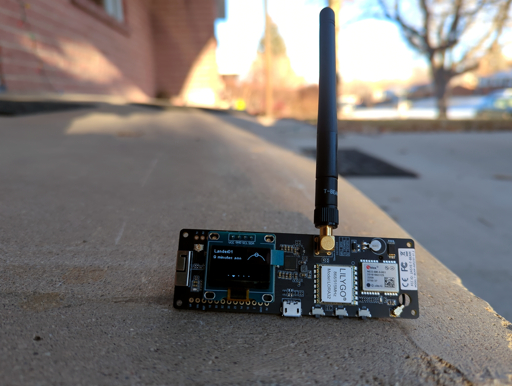
Although everyone has their own reasons for exploring a new hobby, one of the driving factors behind the popularity of Meshtastic and MeshCore has been the incredible accessibility offered by off-grid LoRa mesh networks. You don’t need any expensive hardware or a license to get on the air — armed with a $20 microcontroller dev board and open source software, you could be on the mesh in minutes. Then came the really exciting part, seeing who else was out there. The low barrier of entry and ad-hoc nature of these projects meant there was a good chance you’d soon find yourself exchanging messages with other like-minded folks in the area.
Or at least, that’s how it used to be. With the recent revelation that their default radio configurations have potentially been in violation of the Federal Communications Commission’s (FCC) regulations governing amateur usage of the 900 MHz industrial, scientific and medical (ISM) band, the users and developers of both Meshtastic and MeshCore have been sent scrambling. Getting in compliance isn’t necessarily a technical challenge. In fact, Meshtastic has already introduced changes aimed to address the issue and anyone running the latest alpha release can be sure that their initial radio configuration will meet FCC standards.
But unfortunately, this introduces a new problem. While it’s easy enough to get new installations of Meshtastic and MeshCore operating in a mode that keeps the FCC happy, doing so breaks compatibility with everything that’s already been deployed. The community will be fractured into distinct strata depending on when they first configured their hardware, with an added dash of confusion from the more rebellious users who will undoubtedly refuse to migrate over to the new settings.
Switch to Reticulum. Meshtastic/Meshcore were never scalable traffic/node wise.
IMO they should have a set, compliant default for the radio and not allow users to change it.
Since at least the early 90s we’ve seen a continuum of unlimited variations on themes, and we’re still here. But somehow, having to adjust to one more new change is going to “shatter” everything. This is like seeing “Game Over!” in a youtube title.
This seems like it might only cause a temporary fragmentation (hopefully) until everyone eventually switches over to the new version right?
Yes with the asterisk that a decent amount of the off-grid hardware hidden in trees around the country will probably never get a firmware update. Because people have either forgotten about them or can no longer reach them. It’s already a big issue with orphaned nodes running outdated firmware clogging up the default LongFast channels in more densely populated areas.
You’re telling me I have to climb on top of that building at night, surreptitiously, AGAIN?
DO IT FOR THE
VINEMESH!!
Also, isn’t LoRa based on proprietary technology?
Yes. The actual modulation itself is proprietary, but everything above that is open source.
Regardless, if let’s say the company producing the hardware decides to stop producing it, then there’s nothing anyone else can do about producing new ones, right?
I guess kinda?
I think there are unfortunately only 1 transceiver that supports Meshtastic Meshcore
Semtech SX1262 which is an American company
I’ve heard of Meshtastic and Meshcore but haven’t really looked into it. I’m very interested in getting started and what all I need to do it, if anyone has some good information or sources. With the state of the way the internet is becoming and I now self-host my own media server, I would like to make this one of my next setups.
Pretty much the only step is picking a device - do you just want a little stick for testing or making a repeating station, or would you rather have a more standalone device with a big (relatively) screen and maybe a keyboard? Do you want/need GPS? Consider how you’re going to power it - pro tip, discarded “single use” vapes are a great source of small rechargeable LiPos.
Both Heltec and LilyGo are good choices with regards to reliability and compatibility. Go on their websites and get an idea of what’s out there, then pick one and you’ll be up and meshing the same day you receive it!
Since you covered the important bits, I’d add :
ESP32 if you want WiFi but short battery life, nRF52 if you want long battery life but no WiFi.
Will definitely probably want wifi, so ESP32 will probably be the route for that.
I breezed through the other replies and didn’t see anyone asking why you want wifi.
If you’re going to hang a node somewhere and have it solar powered, the nRF52 will give you waaaaaaaaay longer life and easier (solar) recharging. I’ve got nodes that have been out (unmaintained) for three or four years now, running on a 2,000mAh battery and 2x crappy 60mA@5v solar cells, and they’ve never dropped out as far as I can tell… even in deep winter when you shouldn’t be charging lithium-ion battery packs in sub freezing temps : )
I’m probably dumb, but I don’t see why anyone wants wifi from a LoRa node when all it does is rob power/longevity without adding any benefit that I can think of.
Thanks for your opinion. I probably wouldn’t need wifi. I just thought it might good to have it so why not lol. I really don’t know much about it all yet. Definitely would rather have the much longer battery life if there really isn’t a need for wifi.
You can get a kit for $200 or so that comes with solar, battery, WiFi, Bluetooth, LoRa antenna, … it’s pretty much plug and play by that point.
Any recommendations on a quality full kit?
I have this one for Meshtastic and it works great, but uses Bluetooth for configuration rather than WiFi: https://www.seeedstudio.com/SenseCAP-Solar-Node-P1-Pro-for-Meshtastic-LoRa-p-6412.html
Same product but with Meshcore instead: https://www.seeedstudio.com/SenseCAP-Solar-Node-P1-Pro-for-Meshcore-p-6741.html
I don’t have this one, but it has WiFi as well: https://www.newegg.com/p/0XP-06T7-000M3?item=9SIC4NEKST8969
Without wifi lowers the power requirements, probably better suited for a solar setup. Not sure how reliable that last one would be, but worth a shot I’m sure.
Is there any difference in the hardware between Meshtastic and Meshcore? I didn’t think there was… but I haven’t been keeping a close eye on it.
I have a lot of RAK4631 based builds and I flashed a few from Meshtastic to Meshcore, said “meh”, then flashed back to Meshtastic. So … I assume no hardware difference. I think it’s mostly just the software/routing protocol that is different (which is why I stuck with Meshtastic).
EDIT: Also tried RNode (Reticulum) on the same hardware which was… interesting, but a silly protocol to have on a solely LoRa device.
I would add, be sure to turn off the setting that broadcasts your precise location. Unless you’re into that sort of thing, I guess.


