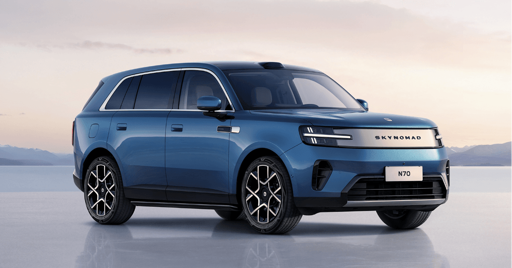
The SkyNomad—with heated floors, a projector, a pop-up roof, a fridge, swiveling seats, and over 1,000 miles of range—is a “luxury” ride that undercuts Range Rovers by tens of thousands of dollars.
Key figures and findings regarding BYD’s government funding include:
The Kiel Institute Study (2018–2022): A widely cited study by Germany’s Kiel Institute for the World Economy estimated that BYD received approximately $3.7 billion (€3.4 billion) in direct government subsidies between 2018 and 2022.
Scaling Support: State aid to the company ramped up significantly over time. For example, out of the $3.7 billion tracked through 2022, a major share—roughly $2.2 billion—was awarded in 2022 alone.
Annual Financial Disclosures: BYD regularly lists government grants, subsidies, and R&D support in its public financial reports. For instance, annual filings have shown billions of yuan in recurring state backing channeled into specific production lines and technological innovations.
Broader Context
While the $3.7 billion figure covers tracked direct corporate aid, international trade analysts and economists point out that BYD’s total structural advantages also stem from wider government policies. These include:
Supply Chain Subsidies: Extensive state backing upstream in the EV supply chain, particularly for battery manufacturers (such as localized support for lithium processing and battery cell production).
Infrastructure and Operational Perks: Access to heavily subsidized land, cheap electricity, and localized tax incentives designed to accelerate China’s green technology and clean energy sectors.
Basically, the only thing the US failed to do from this list was a successful pivot to green technologies and the cheap, abundant electricity they could provide. There were many plans that had plans to process and build lithium batteries, that were dismantled after Trump 2.


JFC Lemmy… BYD is a public company and was originally funded by Warren Buffet. He made almost 9 billion.
Key figures and findings regarding BYD’s government funding include:
The Kiel Institute Study (2018–2022): A widely cited study by Germany’s Kiel Institute for the World Economy estimated that BYD received approximately $3.7 billion (€3.4 billion) in direct government subsidies between 2018 and 2022.
Scaling Support: State aid to the company ramped up significantly over time. For example, out of the $3.7 billion tracked through 2022, a major share—roughly $2.2 billion—was awarded in 2022 alone.
Annual Financial Disclosures: BYD regularly lists government grants, subsidies, and R&D support in its public financial reports. For instance, annual filings have shown billions of yuan in recurring state backing channeled into specific production lines and technological innovations.
Broader Context
While the $3.7 billion figure covers tracked direct corporate aid, international trade analysts and economists point out that BYD’s total structural advantages also stem from wider government policies. These include:
Supply Chain Subsidies: Extensive state backing upstream in the EV supply chain, particularly for battery manufacturers (such as localized support for lithium processing and battery cell production).
Infrastructure and Operational Perks: Access to heavily subsidized land, cheap electricity, and localized tax incentives designed to accelerate China’s green technology and clean energy sectors.
Basically, the only thing the US failed to do from this list was a successful pivot to green technologies and the cheap, abundant electricity they could provide. There were many plans that had plans to process and build lithium batteries, that were dismantled after Trump 2.
Honestly I do think the US should do this too. But as China is currently the only one doing it on this scale, it is vastly skewing market dynamics.