

Sorry for being in a hurry, but these new methods differ from de-salination plants…?
I got you. From the article:
Desalination can provide a critical water supply, but today’s most common methods come with significant drawbacks. Reverse osmosis forces water through specialized membranes to remove salt, while thermal distillation uses heat to separate fresh water from seawater. Both approaches can consume large amounts of energy, often require water treatment before and after the process, and generate a highly concentrated salty waste known as brine.
When that brine is discharged back into the ocean, it can increase local salinity and reduce oxygen levels, creating harmful conditions for marine organisms.
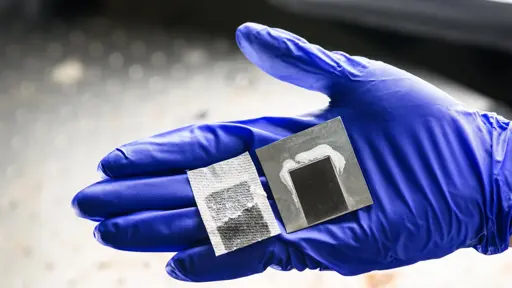
In Professor Chunlei Guo’s lab at the University of Rorchester, researchers developed a solar desalination device featuring laser-etched superwicking black metal, a technology that produces fresh water from seawater while capturing salts and minerals instead of generating harmful brine waste. Credit: University of Rochester / J. Adam Fenster
Tl;dr - Different method for the same desalination, but keeps & transforms the waste into useful stuff instead of throwing it out
Huh! Okay…
Thank you!Unfortunately, haha, as with most such tech advances, I’m just waiting for billionaire a-holes to buy up the means of production and use it to further leverage it against the common man for capitalistic purposes. Same ol’, same ol’.
(nevermind, that’s just my cynical side talking 😅)
At the heart of the technology are solar panels made from black metal that has been treated with femtosecond lasers. A femtosecond is an extraordinarily short unit of time, equal to one quadrillionth of a second. Pulses from these ultrafast lasers can precisely alter a material’s surface, creating microscopic structures that dramatically change how it interacts with light and water.
Neat
And it’s very easy to make, you just need to ask Finland to get black metal